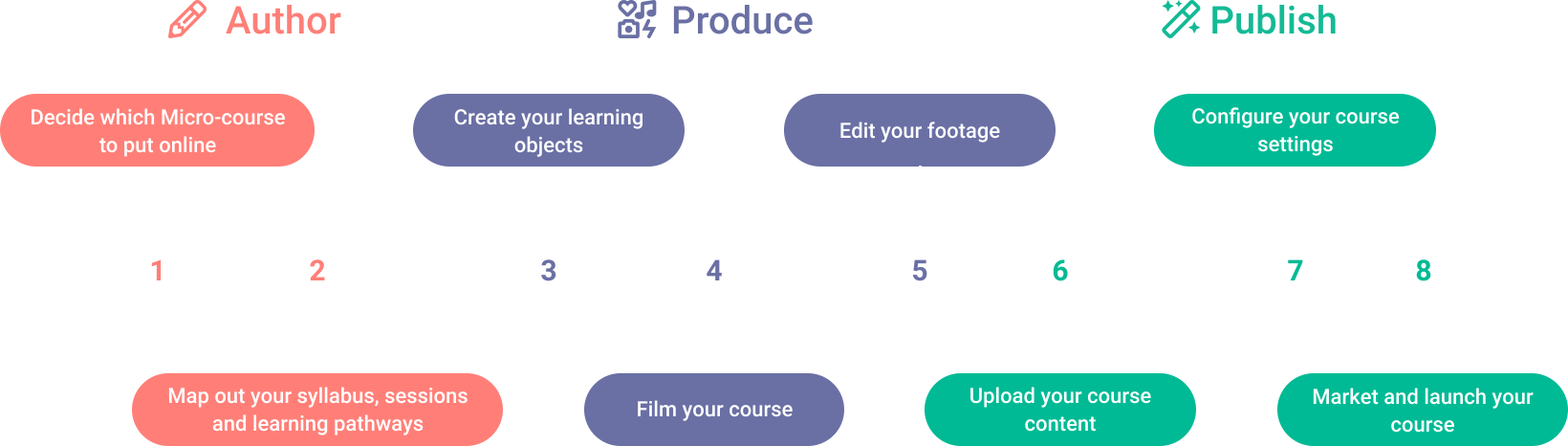



Consider learner motivation, benefits for you and profitability
As a kadenze.com author and instructor, you are developing your course at a time when educational opportunities are opening up for all. Today, education is seen as a life-long necessity. To help you choose which course to offer and to whom, it is important to consider who will invest in your course. Start by identifying who (individuals or groups of people) in your networks you might promote your course to, and what might compel people to enroll and spend their valuable time.
As you think about which course, keep in mind that a Micro-course will have between 2 to 4 sessions, typically made up of a number of 1-5 minute videos and other instructional activities. Each video and activity will make up a lesson. A session typically has 4-8 lessons. These guidelines don’t have to be followed exactly but start thinking about ‘chunking’ (breaking your content into a cluster of material) addressing the topics of your course. Do make sure your lessons create a scaffolded learning pathway where each lesson builds on the ones before and moves towards your intended goals.
Learner motivations
Many learners are no longer prepared to spend the time and money in lengthy undergraduate or postgraduate degrees. Instead, they seek out short courses that target their immediate learning needs for career advancement. Your Micro-course may perfectly address that need and an online program offers a flexible learning environment which can be managed around work schedules. Learners wishing to advance their careers seek out Micro-courses which enable them to:
- Gain expertise to enhance their current and future work prospects
- Improve their technical skills
- Expand their career horizons and networks
- Strengthen their resume
In addition, it is important not to underestimate the thirst people have to pursue learning for its own sake – for personal development and interest – though it’s important not to overvalue it either. For makers, hobbyists and enthusiasts of all ages, the internet has opened up many horizons to acquire knowledge, skills, and understandings within their communities of passion and interest. Learners tend to value acquisition of skills differently, however, and prioritize those skills and credentials that measurably help them succeed in their careers, or that open doors for them to pursue their passions professionally.
Benefits for you, the author and instructor
As you clarify the value learners will find in your course (and their reasons to enroll), keep in mind that there are benefits for you in becoming a Micro-course author and instructor. Around the world there will be many learners seeking what you have to offer knowing that it will enrich their lives and circumstances. It is not a small thing to be able to share your expertise globally and inexpensively.
As you plan your course for maximum engagement, it is likely you will increase your own understanding of your topic. Seeing your content through the eyes of others, always deepens your own expertise. If this is your first online course you will learn much as your live classroom is adapted for global learning. A Micro-course is a perfect way to begin your serious adventures in online learning design. Because it is contained in size and scope it is a manageable challenge and an ideal first educational and experimental step in building a semester-long college course one day. If you have never created an online course before, start modestly by working with content you know well and repurpose it for your target audience.
Once you launch your course, the analytics it generates can guide your future online plans. The data generated from your first course will help you identify:
- How best to grow your online audience
- Interest in future Micro-course topics
- Opportunities to scale up your Micro-course into a more extensive Program of study
Profitability
Finally, in deciding which Micro-course you will invest your time and energy, first do some careful thinking about its profitability. Consider the following:
- To whom are you selling?
- What is the value of your Micro-course for them?
- What ‘problem’ will the course address for learners?
- What are the markets for your course?
- What is the revenue potential?
- The key question for your potential students – what is it going to cost?
- Against your estimate of possible financial returns what costs will you need to bear in order to launch an engaging and viable course?
- How might you promote it using social media, chat boards etc.?
Remember too you will not be on this journey alone. Our guidelines for designing a course on kadenze.com using Technology Enabled Creative Learning (TECL) SM will mentor you through this process and our package of resources will support you to become a kadenze.com author, producer and publisher.